"OK" from Customers, but What is the Real Unspoken Need? AP Unveils the Secrets Behind Successful Sales Strategies by Understanding Customers
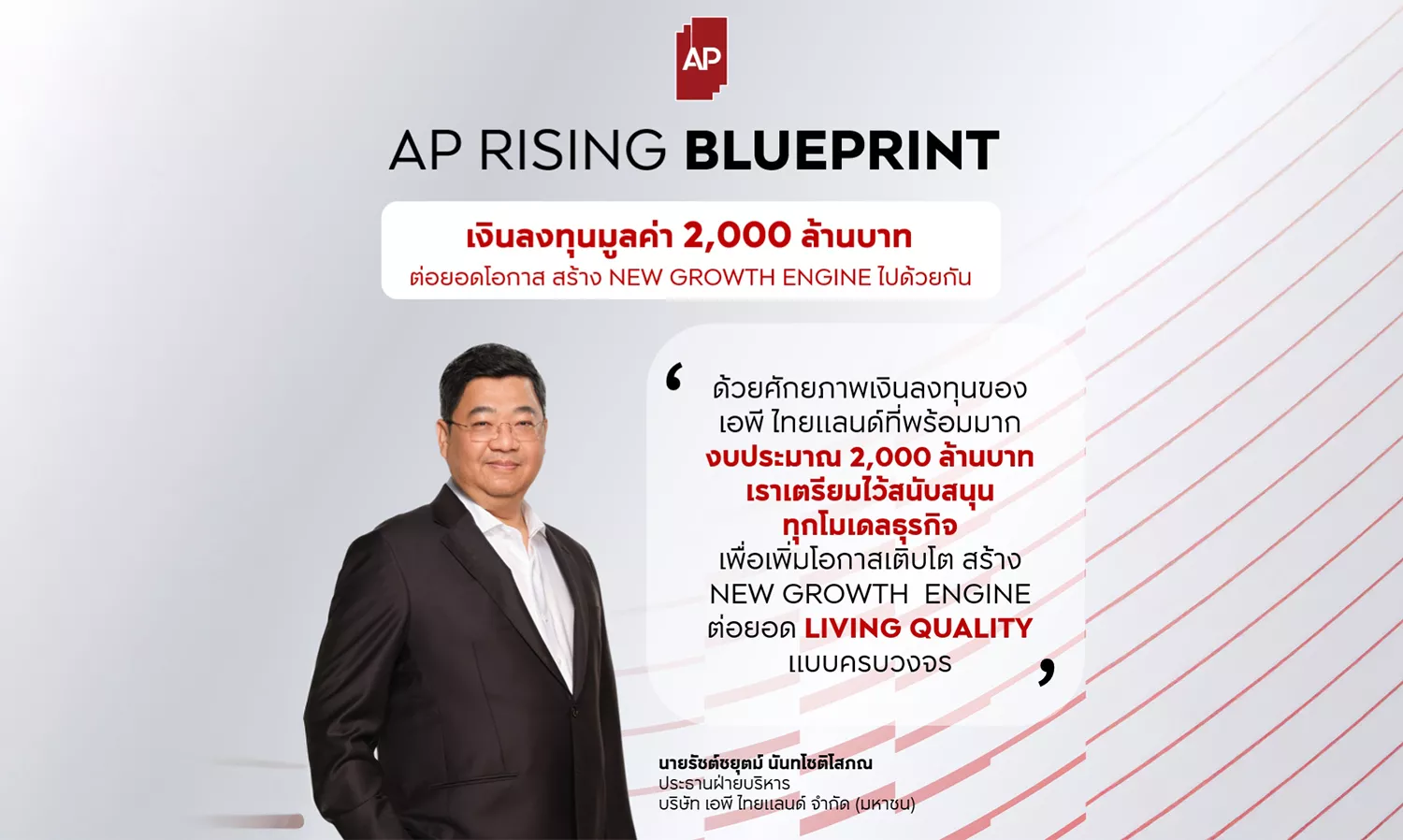
In a 40-minute discussion with Ken Nakarin and Jhim Ratchachayutman, the new President of AP Thailand, on the show The Secret Sauce, we delve into the insights of a person who has been both in the spotlight and behind the scenes at AP since its inception over 18 years ago. From a team of more than 500, it has now grown to over 3,000.
1. Today, Jhim takes on a new role that has never existed before at AP Thailand: President, which encompasses the responsibilities of a Managing Director. Previously, he was in charge of all horizontal projects at AP Thailand.
2. Understanding the work process through empathy, design thinking, and an outward mindset with team members is crucial, as the least costly investment is listening to the team.
3. The greatest challenge is EGO, which frames our thoughts as correct. This mindset can hinder progress because past successes do not guarantee future success.
4. Business must balance performance with people, as these two aspects must go hand in hand. AP has never laid off employees during past crises nor reduced salaries, as that diminishes morale. Instead, we must collaborate on how to work together effectively.
5. Communicating to the team why we must take certain paths is essential. If the company grows, how will it benefit the team? How will their career paths develop? We want individuals who understand AP to work with us and grow alongside the company. Our role today is to motivate the team because if a cog is missing, the work cannot proceed. Thus, people are the backbone of AP's growth.
6. Understanding customers is as important as understanding employees. We must genuinely grasp what customers want. Our foundation lies in understanding each customer segment, which is why we lead the market in single-family homes, duplexes, townhomes, and condos. We even need to understand the behaviors of different segments; for instance, some groups cook together on weekends and require kitchens that accommodate family activities.
7. Today, competition in the real estate market is not just about results but also about the processes that lead to those results. While the saying "Location is King" holds true, location alone is not a competitive advantage. Anyone with money can buy land, so location is merely a process of acquiring that land and not the final factor in a customer's choice. This understanding gives AP a competitive edge.
8. AP identifies customer needs before anyone else by leveraging extensive data and using AI to analyze that data to understand customer desires.
9. The word "OK" from customers during home viewings often conceals their true unspoken needs—those feelings and desires that are never expressed. This understanding comes from observation, not just from spoken words.
10. Future competition will not just be about house types or functions but about presenting and competing on value. Customers are not just interested in functions; they care about how those functions meet their value needs.
11. Understanding unspoken needs comes from observation, asking questions, and engaging in conversations to grasp what concerns customers and presenting solutions accordingly.
12. Advertising must reflect that customers do not judge solely based on product, function, or location. They choose based on whether the location meets their lifestyle needs and what the project supports. For example:
- A single-family home may have two living rooms because they need to serve multiple functions post-COVID-19.
- The second and third bedrooms must be of equal size; the older sibling should not automatically get a larger room.
- How much walk-in closet space is truly sufficient for practical use?
- In one AP townhome project, there are up to six house designs available because some groups need a bedroom on the ground floor, while others may only need a second-floor bedroom, or even a third-floor bedroom, reflecting the varied needs of different groups.
13. One continuous effort at AP is to empower team members to make decisions. Everything should not bottleneck at the top. For instance, the design of single-family homes is no longer top-down; it now comes from the bottom up. Team members communicate customer needs for home functions, trends, and marketing strategies to compete effectively. We cultivate a culture where team members contribute ideas and take ownership, while we support, listen, solve problems, and enable them to move forward.
14. Gen Z comes with confidence and a desire for freedom, but that freedom must have boundaries. AP has a checklist for what is needed:
- Will what is needed cause harm to others or the company?
- Will it inconvenience others or make their work more difficult?
- Does it align with AP's vision/mission of creating a good life that can be chosen?
If all three criteria are met, we can sit down and discuss it. Currently, we want everyone to have a sense of ownership.
15. With over 3,000 employees, there are diverse perspectives. It's important to note that 80-90% of new marketing ideas come from younger team members, fresh graduates, or those with 1-2 years of experience, including professionals from other fields. Marketing is constantly evolving based on customer needs, so we seek ideas and encourage experimentation. This is the true secret sauce.